
Key Takeaways from “Look Forward for 2026”
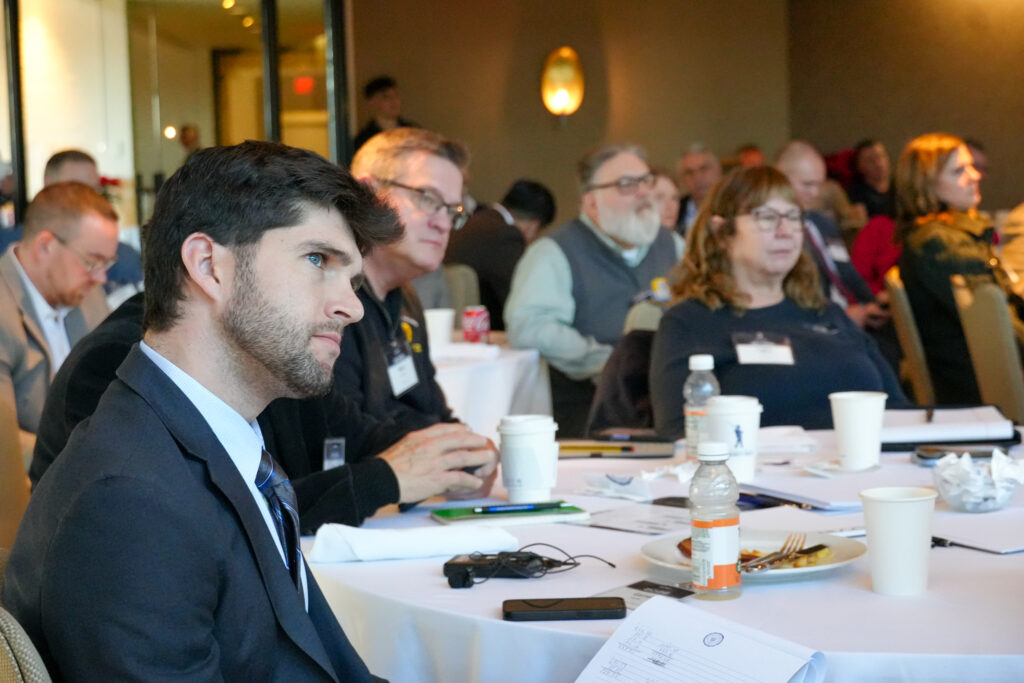
On December 12, 2025, more than a hundred manufacturing leaders, entrepreneurs, and innovators gathered at Union League Liberty Hill for DVIRC’s “Look Forward for 2026” event—a thought-provoking examination of the trends, policies, and workforce dynamics that will shape American manufacturing in the coming year.
The event brought together industry veterans and emerging voices to tackle four critical themes: politics and policy, workforce succession, technology, and economic outlook. Here’s what attendees learned—and what it means for your business.
Chris Scafario, President and CEO of DVIRC, opened the event by setting context for the day’s conversations. Following Scafario’s remarks, Paul Tramo, owner of Sentinel Process Systems, spotlighted the Travis Manion Foundation (TMF), an organization led by veterans and families of the fallen that serves together and supports each other.
All proceeds from the event went to support TMF’s mission and programming.
The Political Landscape: Tariffs, Regulations, and Manufacturing Strategy
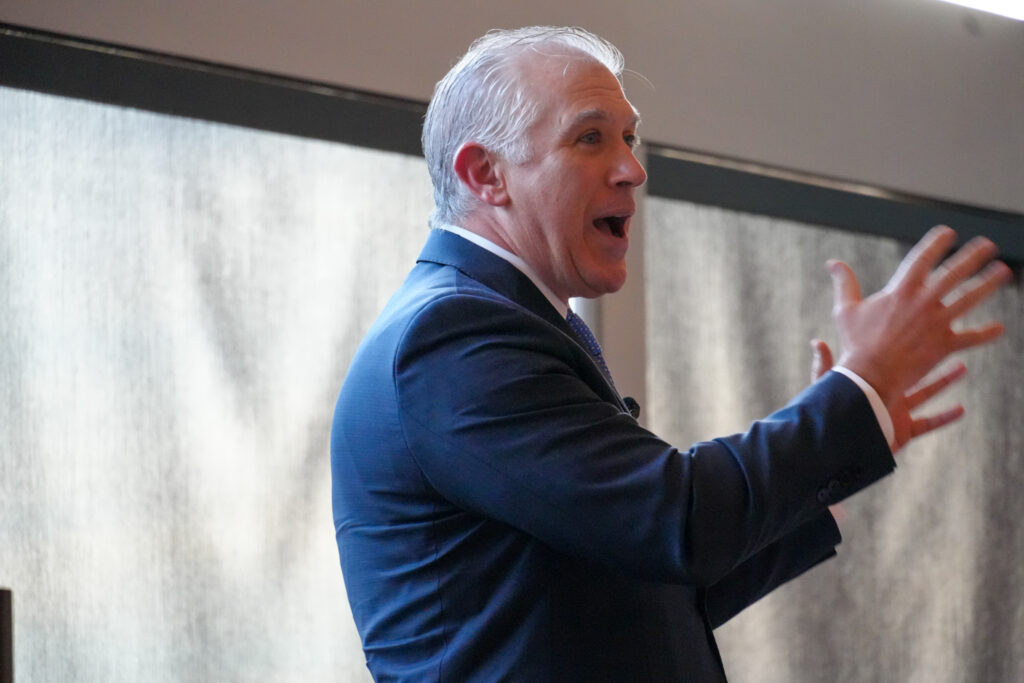
Mike Conallen, founder of MJC Consulting and former US Navy Lt. Commander, opened the substantive portion of the morning with a candid discussion of the political environment and its direct impact on manufacturing. Conallen didn’t shy away from tough questions: Who are the key policy makers? How do government institutions affect our industry? And perhaps most importantly, how can manufacturers meaningfully engage with the political process?
The backdrop for this discussion is significant. President Trump’s second term brings a clearly articulated manufacturing agenda that combines protectionism, regulatory rollback, and strategic reshoring. The specifics matter: universal baseline tariffs are already in discussion, with targeted tariffs of 60% or more on Chinese goods. These aren’t hypothetical trade theories—they’re policy drivers that directly affect supply chains, material costs, and competitive positioning.
Conallen highlighted the legislative context too. Congress has enacted significant manufacturing investments since the mid-20th century: the CHIPS Act, clean-energy manufacturing subsidies, Buy America procurement incentives, tax credits for manufacturing and R&D, and infrastructure-driven demand. The consistent bipartisan theme: rebuild American industrial capacity and reduce reliance on foreign supply chains.
For manufacturers in Pennsylvania and New Jersey, understanding the Congressional composition matters. Pennsylvania’s 17-seat House delegation leans Republican (10 to 7), while New Jersey’s 12 seats lean Democratic (9 to 3). The state’s Senate delegations include David McCormick (R-PA), a former Bridgewater CEO and Gulf War veteran; John Fetterman (D-PA), the former Braddock mayor; Cory Booker (D-NJ), a Rhodes Scholar and Newark native; and Andy Kim (D-NJ), a former State Department advisor and House member.
The Bottom Line: Understanding policy doesn’t require a political science degree, but it does require engagement. Those who sit out the political process surrender influence to those who show up.
Workforce Evolution: Navigating the “Grey Wave” and Generational Transition
Few topics were more relevant to the morning’s audience than workforce succession and the demographic challenge facing manufacturing: how do you transition an enterprise built by boomer-era founders to the next generation, particularly when skilled workers are aging out faster than they’re being replaced?
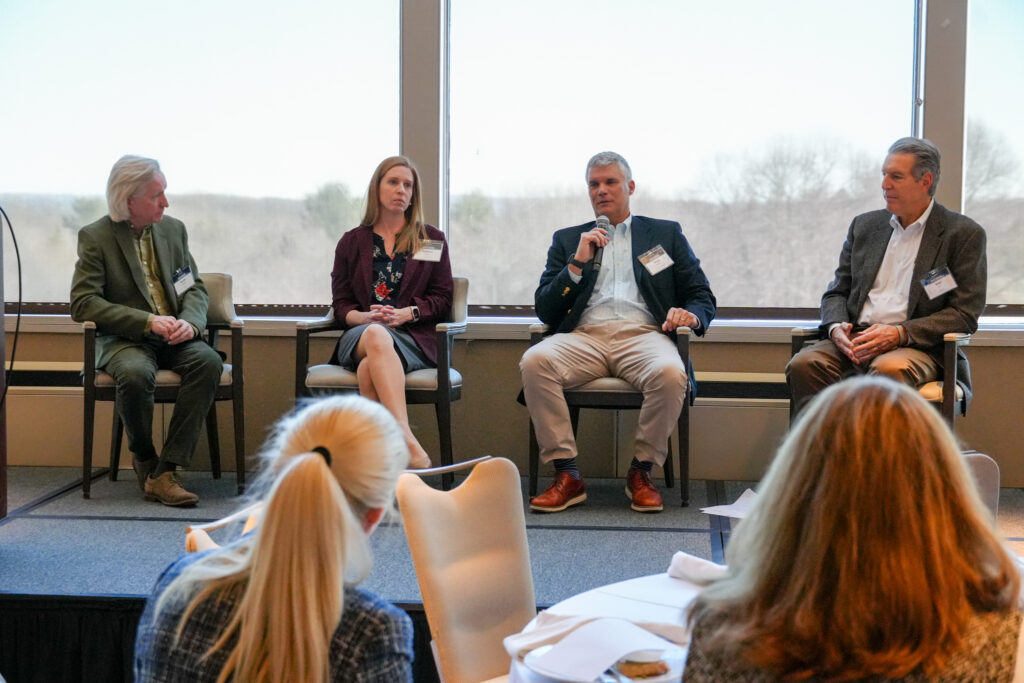
A panel featuring Kevin McPhillips of the Baker Center for Employee Ownership, alongside business owners Ken Baker (New Age Industries), Mark Steffens (Airline Hydraulics), and Katrina Samarin (Kreischer Miller) explored this nuanced challenge. The “Grey Wave”—the pending retirement of experienced manufacturers—isn’t abstract. It’s a structural reality that touches recruitment, knowledge transfer, company culture, and ownership models.
The conversation revealed a central tension: traditional manufacturing has long attracted people through blue-collar pathways that are increasingly less common. Apprenticeships and technical education require renewed investment and visibility. Ownership transitions can take many forms: family succession, management buyouts, ESOP structures (Employee Stock Ownership Plans), or sale to private equity. Each model has different implications for company culture and long-term viability.
What became clear is that succession planning isn’t something to tackle in the final five years before retirement. The most successful transitions begin with intentional strategy, honest conversations, and early engagement of potential successors—whether they’re children, rising managers, or institutional partners.
The Bottom Line: The next generation of manufacturers is being decided now. Businesses that wait to address succession will find themselves making compromises they didn’t anticipate.
Academic Innovation: AI, Automation, and the Accelerated Learning Curve
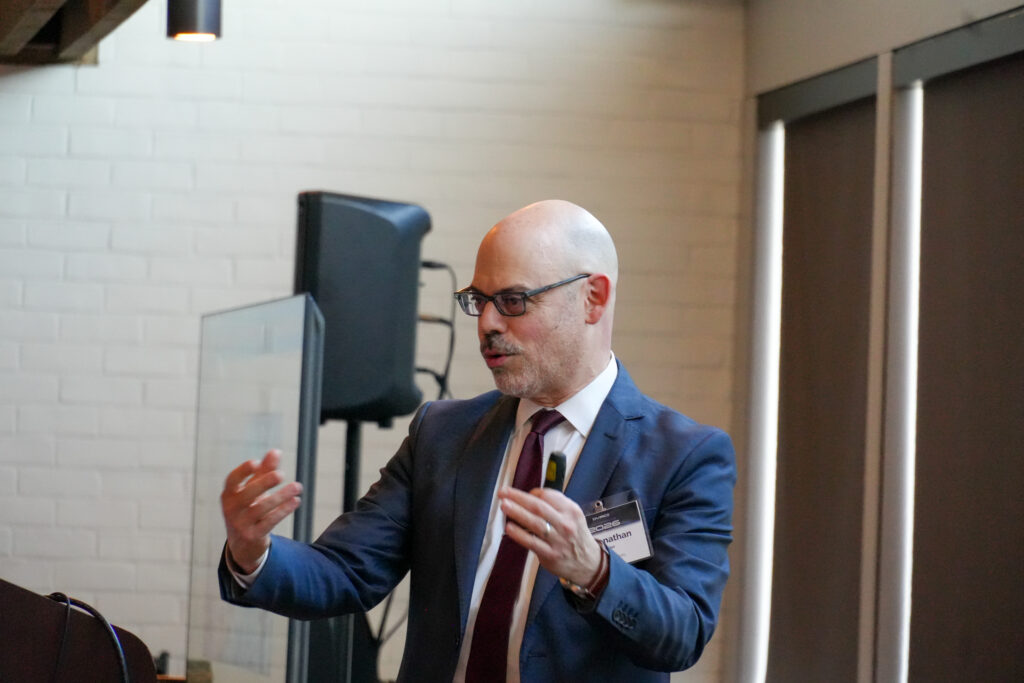
Dr. Jonathan Spanier, Hess Family Chair Professor and Department Head at Drexel University, identified a fundamental shift reshaping manufacturing: artificial intelligence is disrupting the traditional learning curve.
Historically, manufacturers relied on “Wright’s Law,” the principle that repeated production combined with human and process learning enables incremental improvements over months or years. AI changes that. Knowledge and optimization can now emerge in weeks or days, allowing manufacturing to pre-solve planning, capacity, routing, quality control, and cost optimization through AI-assisted modeling before deployment.
This acceleration creates a parallel challenge: the skills half-life for software and AI expertise has shrunk to 2-3 years. Workers trained five years ago may find their expertise deprecated. This is where nimble academic institutions become indispensable as innovation partners operating at manufacturing speed.
Rather than waiting for industry problems to filter into curriculum over years, Drexel is deploying students as rapid prototypers and faculty labs as translational engines for design optimization. Real projects illustrate the approach:
The Philadelphia Navy Yard Autonomous Vehicle Shuttle is an interdisciplinary project where students designed and launched the first driverless shuttle in the greater Philadelphia region. Predictive machine learning models developed in labs continuously track sensor data from industrial production lines, detecting abnormalities before catastrophic failures occur. The Turbine Technologies Mini-Lab, a lab-scale turbojet engine system, strengthens hands-on teaching in jet propulsion, combustion, and thermodynamics.
Success in the AI-accelerated era depends on combining artificial intelligence with human judgment, domain expertise, and governance. Universities positioned to bridge that gap will be the ones manufacturers partner with.
The Bottom Line: The innovation advantage goes to manufacturers who embed academic partnerships into their strategy. Universities are innovation engines now, not just workforce suppliers.
Economic Outlook: What 2026 Means for Your Business
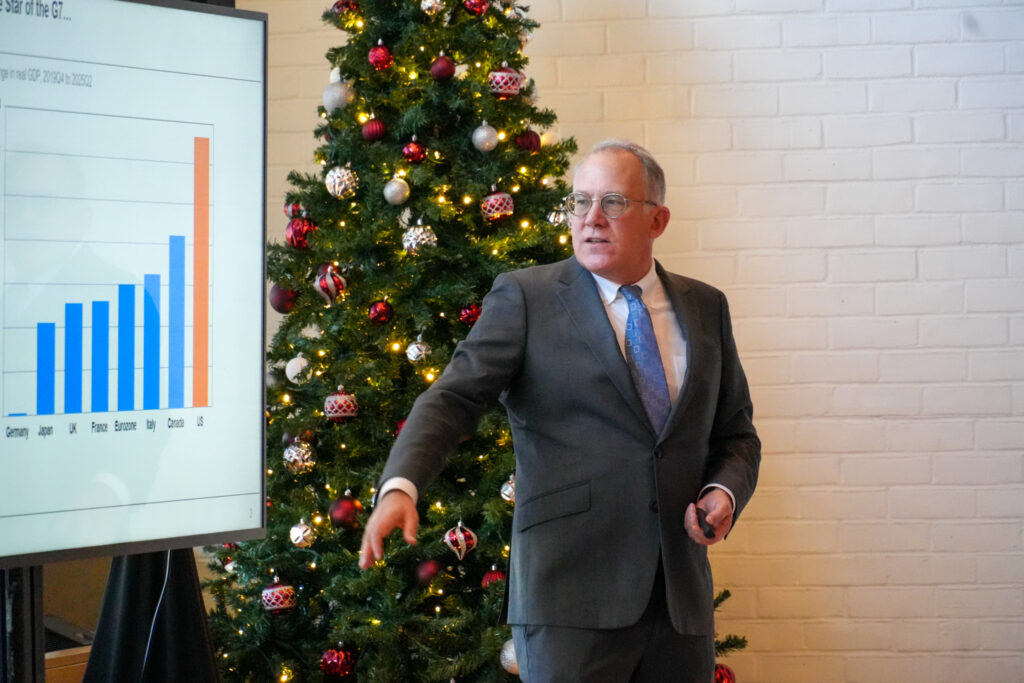
Gus Faucher, Chief Economic Officer at PNC Bank, closed the morning with a clear economic assessment. The numbers tell a complex story:
Inflation remains elevated. Prices are 24% higher than they were in February 2020. While headline inflation has moderated from pandemic peaks, it hasn’t returned to pre-pandemic levels. For manufacturers, this translates to persistent cost pressures and the need for operational efficiency to maintain margins.
The Federal Reserve has pumped the brakes, but credit conditions remain tight. The Fed continues to shrink its balance sheet, a shift from the post-2008 era of quantitative easing. For manufacturers dependent on working capital financing or growth capital, this means higher borrowing costs and stricter credit standards—a significant headwind for smaller and mid-sized businesses.
Housing remains soft. The housing market, an important proxy for overall economic confidence, shows no meaningful rebound. Mortgage rates remain elevated, affordability continues to deteriorate, and existing home sales remain depressed. This signals constrained consumer confidence heading into 2026.
Manufacturing activity is sluggish. Industrial production remains soft, and the ISM manufacturing index hovers below the 50 mark that indicates expansion. This isn’t a recession—yet—but it’s decidedly not robust growth either.
Wage growth and employment remain resilient. Despite economic headwinds, the labor market has proven surprisingly durable. Wage growth has moderated but remains above the Fed’s 2% inflation target, suggesting the labor market is tightening more than some anticipated. For manufacturers dependent on labor, this means continued upward pressure on payroll costs.
The broader economic context: the equity market has famously “predicted 26 of the past 8 recessions”—meaning market corrections frequently fail to precede actual downturns. As of late 2025, consensus anticipates modest growth but not exuberant expansion.
The Bottom Line: 2026 is a year for operational excellence and financial discipline. Revenue growth may be constrained; profitability comes from improving efficiency and managing costs carefully.
What Comes Next?
The “Look Forward for 2026” event was neither a cheerleading exercise nor a doomsday forecast. Instead, it reflected a mature assessment: American manufacturers face meaningful headwinds—policy uncertainty, workforce transitions, and tepid economic growth—but also genuine opportunities, particularly those who engage strategically with policy, invest in their workforces, and maintain operational discipline.
Several action items emerged for attendees:
For policy engagement: Manufacturers should understand the Congressional landscape, particularly state-level representation, and consider participating in industry associations that engage with policymakers. The manufacturing-friendly policies currently in discussion won’t happen without active manufacturer participation.
For workforce strategy: Whether your company is thinking about succession, recruiting, or skills training, the time to act is now. The “Grey Wave” isn’t coming—it’s here. The best companies are already in conversation with academic institutions, considering different ownership models, and making intentional investments in the next generation of leadership.
For economic planning: 2026 should be approached with cautious pragmatism. Expect modest growth, elevated cost pressures, and constrained credit availability. Companies that focus on operational efficiency, working capital management, and realistic revenue growth will outperform those chasing optimistic forecasts.
For innovation and partnership: Academic institutions are equipped to be innovation partners, not just talent pipelines. Manufacturers that work with universities on process improvement, research, and applied learning gain competitive advantage—and contribute to stronger regional ecosystems.
Ultimately, “looking forward” isn’t about predicting the future. It’s about understanding the currents—policy, demographic, economic, and educational—and positioning your business to navigate them effectively. This event offered a clear-eyed view of those currents. The rest is execution.
For more information about DVIRC events and membership, visit www.dvirc.org or contact info@dvirc.org. To learn more about the Travis Manion Foundation and its mission to support veterans and families of the fallen, visit www.travismanion.org.